impact extrusion for bullets for handgun cartridges

Paul 27349

Beginner
Oct 5, 2026
7
0
Greetings,

I am interested in the optimization of pistol cartridges for use in PCCs such that the projectiles would be launched at sub-transonic velocities and that the bullets would be suppressor friendly. I currently have a Ruger LC carbine chambered in 45 acp with a 16" barrel. I run it with a YHM 45 can, and I have had the charging handle converted to a reciprocating style by a local gunsmith. When I hold the bolt forward while launching a subsonic round suppressed, the gun is hearing safe and and I believe indoor safe. It's my homestead defense gun.

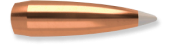
That being said, and in looking at articles about optimizing interior ballistics in order to get the most efficient transfer of energy and best possible accuracy, and in looking at cross sectional views of the Partition bullets in particular; I have come to the hypothesis that a Partition style bullet with no lead in the base could be the answer.

The lead free hollow base would serve as a combustion chamber in which obturation could be optimized, and it would not leave any lead fouling in the suppressor. The skirting of the hollow base would lengthen the bullet thus improving form factor thus improving BC without creating a need for faster twist rates because the center of mass would be far enough forward relative to the center of pressure.

The nose cavity would be filled with a lead plug as with the usual Partition bullets, but it could be hollow point and sliced like the noses of HST bullets. The design would have to allow for expansion down to around 700 fps.

So quiet, accurate, and able to expand at sub-transonic velocities is all I want. I think the impact extrusion process could create some interesting bullets. What do you say, Nosler R&D?
 
Welcome to the forum.
I follow what you are saying but unfortunately there most likely isn’t enough volume to support the need. Nosler used to offer Partition Gold Handgun bullets for 38/357, 41 and 44 cal but discontinued them 20 years ago because there wasn’t enough demand.

JD338
 
I think to get what you want you’re going to need to be the idea guy, the r&d guy and then the manufacturing guy.
The old Nosler Partition pistol bullet is my favorite muzzleloader bullet and I’ve been hoarding them since they stopped making them.
 
Welcome to the forum.
I follow what you are saying but unfortunately there most likely isn’t enough volume to support the need. Nosler used to offer Partition Gold Handgun bullets for 38/357, 41 and 44 cal but discontinued them 20 years ago because there wasn’t enough demand.
Thank you. I recon I'll have to stick with the standard flat based, heaviest for caliber cup and core hollow point options for now. I wish there were more 250+ grain options for 45 acp to run through my suppressed 16 inch barrel. Those would be truly sub-transonic. The 230 grain options are dancing at the lower end of the transonic range. I want the maximum quietness of sub-transonic.
 
I think to get what you want you’re going to need to be the idea guy, the r&d guy and then the manufacturing guy.
The old Nosler Partition pistol bullet is my favorite muzzleloader bullet and I’ve been hoarding them since they stopped making them.
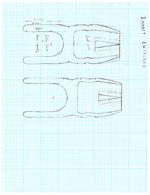
The ideas come cheaply and easily. The R&D part requires a bit more capital investing. I would need the machinery that Nosler has, and all of the hand loading equipment of which I have none currently. So, what kind of accuracy have you gotten with your Nosler bullets out of your muzzle loader? What do those bullets look like in cross section? Anything like the attached file?
 

Attachments

  • DOC.pdf
    146.8 KB · Views: 5
It’s a pistol the bullet, the accuracy is very average, 2 or 3” at 100 yards is easy. I can’t see your attachment but it’s a flat point bullet and the cross section is like every other Partition bullet.
The A Frame bullets are still available as pistol bullets, or were last I knew.
 
Some highlights from:
Bullet Obturation of Rifle Barrels
James A. Boatright
December 13, 2018

Introduction
The sealing, or obturation, of the hot gasses produced during combustion of gunpowder propellants is a significant concern in interior ballistics. Leakage of some of the hot gasses past the projectile in the barrel causes damage to the barrel and to the projectile. This gas leakage is also responsible for much of the observed variation in muzzle velocities from one shot to the next. Highest speeds are measured for shots where barrel obturation was best, and reduced speeds are produced when propellant gasses blow by the bullet at peak chamber pressure and thereafter. Early gas leakage damages the sealing surfaces of the bullet and promotes continued gas leakage during the remainder of that bullet’s trip through the rifle barrel.

Barrel Obturation with Jacketed Lead-Cored Rifle Bullets
Conventional jacketed, lead-cored rifle bullets typically obturate conventionally rifled barrels reasonably well, at least well enough for military and big game hunting rifle applications. We will discuss barrel obturation by a typical match-type jacketed rifle bullet made with a core material of essentially pure lead. The soft lead core readily “slugs up” so that the bullet OD easily matches even the pressure-expanded ID of the steel rifle barrel at an assumed peak base pressure P of 54 ksi driving the bullet forward. This permanent, plastic, bullet diameter enlargement is accompanied by a commensurate plastic foreshortening of the lead core within its jacket.

Barrel Obturation with Copper Bullets
This paper addresses the design of monolithic copper bullets so as to achieve effective obturation of the hot powder gasses throughout the interior ballistics portion of the firing process. A 338-caliber copper ULD bullet of my own design is used as an illustrative example.

Base Pressure Ducting by Base Drilling of Copper Bullets
Larger potential (unconstrained) diameter increases and corresponding(constrained) increases in radial surface contact pressures are available by porting the base pressure forward into the body of the monolithic copper bullet.

To be effective in improving obturation, the base drilling depth needs to go completely through the boat-tail and at least mostly through under the rear driving/sealing band.

Test firings of 338-caliber copper ULD bullets show that a base-drill diameter of 0.166-inch (0.503 calibers) allows the copper rear driving band to expand temporarily in outside diameter during firing at 60.0 ksi peak chamber pressure by enough to obturate completely in any reasonable-sized rifling grooves. Unusually high muzzle velocities and single-digit velocity spreads were also obtained in these firing tests. The desired amount of maximum radial OD expansion (2*Uro) can be varied simply by adjusting the base-drill diameter (2*ri) slightly.
 
This is an article by Mark White about suppressor design with a section about bullet design for subsonic work. I like the graph with velocity on the X axis and decibels on the Y. It's another illustration of how impactful the transonic zone is.
It’s a pistol the bullet, the accuracy is very average, 2 or 3” at 100 yards is easy. I can’t see your attachment but it’s a flat point bullet and the cross section is like every other Partition bullet.
The A Frame bullets are still available as pistol bullets, or were last I knew.
2 to 3" at 100 yards is deer MOA!
 
Back
Top