Advice for someone starting out

I do not have the long range shooting experience of others here, as I am limited to 400 and 500 yards on our local gun ranges.
While I do practice with my rifles out to those distances (depending on the range I am visiting at the time), I do so with all of my centerfire rifles, regardless of caliber that re capable of those distances with the hunting loads I have for them, whether they be handloads or factory ammo. This includes blot action hunting rifles in cartridges ranging from 250 Savage to 376 Steyr, with scopes ranging from 1.5-6 to 3-15 on power. All of my hunting rifle scopes are SFP, with most having a BDC type reticle such as the Leupold B&C or Kahles TDS. For my hunting style, environments, and targeted species, these work best for me. But that's me. (I now have a FFP scope with a christmas tree reticle on a LH Bergara B-14 22LR Trainer just so I can learn how to use one, and do more practice with a light recoiling rifle that is fairly inexpensive to shoot, just so I can work on my shooting form more often. I can say that I do not believe that I want a FFP scope on a hunting rifle, as I am quite often in the thick and/or dark timber where a low powered scope with a wide field of view is a definite bonus.) I am also finding that I am liking illuminated reticles with my aging eyes.
In 38 years of hunting, I have taken big game (antelope to bison, and some African Plains Game) from 5 to 475 yards (where I under estimated the range on that 7x7 elk by 75 yards), but my average distance is just 132 yards. And I have less than a handful of animals taken at 300 yards or more. And I have hunted pronghorn on the open prairie to mountain game in the alpine, as well as deer and elk in large open ag fields, and on pipelines and seismic lines.

While I would like to practice at longer distances, I am limited to my gun ranges for regular practice. There are days in the field, where there are good backstops at targets such as large rocks, where I will practice, or me and my hunting partners have tested our range estimation and cold bore shots at the targets to see who made to best range estimation and shot placement on the target, and then after all of taken their turn, have ranged the target to see how good our guess was.
I definitely do not intend to hunt at any range further than what I have practiced to...and honestly in the field, any shot at 400 yards plus for me, is a test of skill and ability to get steady enough to feel confident in taking the shot. But then again, I freely admit that I am not the best shot out their, as I shake like a leaf in a high wind, and my eyesight isn't what it once was.
Having seen or watched where others have made great long range shots, I can say that they are those out there that are definitely skilled and well practiced.

What I can say is, in long range shooting, whether it be with firearms or archery equipment, shooting form consistency is a key factor. This along with an accurate load that you are confident in, will make a big difference in your ability to place your shot accurately on target, with proven ballistic data, regardless of the range. While practice is important, quality of practice is more important than quantity of practice.

Your rifle and cartridge of choice is a highly subjective matter, and should really be determined by what you are comfortable with and confident in. And the scope should give you a good balance of optical quality, with the reticle type that best suits your hunting style and environment. As suggested. most seem to be over powered with large heavy scopes, and complex reticles.

It sounds like your 6.5 PRC is a good candidate for this...but as you have great experience with your 7mm and 300 WSM, these are also good candidates...but have more recoil that may limit your number of shots per range session. By not going out and spending additional dollars on a new rifle and/or scope, this gives you additional funds for ammunition or handloads for developing that load that will give you anything more than what you already have to fine tune a load for long range shooting in your existing battery.

From a ballistics standpoint, my 6.5 PRC with 24" barrel, with the 130 gr Terminal Ascent ammunition will still be at more than 2000 fps at 500 yards, carrying almost 1450 ft lbs of energy and having dropped just under 36" with a 200 yard zero. Compare that to the 140 gr AccuBond ammo that will still be doing just under 2000 fps, with just over 1200 ft lbs of energy and having dropped almost 45" with the same 200 yard zero. The felt recoil will be at approx 22 ft. lbs in my scoped rifle weighing 8 lbs 2 oz with a full magazine.(For deer sized big game, retained energy of 1000 ft lbs is recommended for quick clean kills) On another note, I took my 6.5 Creedmoor to New Zealand as I shared the rifle with my wife on the hunt. I took my red stag at 296 yards with one double lung shot, where it fell about 5 yards from where it took the hit. Full penetration on the 450-500 lb animal meant I wasn't able to recover the 130 gr TA bullet to measure expansion and weight retention.

My 7mm Rem Mag with 26" barrel, with the 155 gr Terminal Ascent ammo will still be at just over 2400 fps and have just over 2000 ft lbs of energy, having dropped just over 31" at 500 yards with a 200 yard zero. The 160 gr AccuBond ammo will be doing just over 2300 fps, with 1900 ft lbs of energy, having dropped just over 33" at 500 yards with the same 200 yard zero. The felt recoil will be at approx 26 ft. lbs in my scoped rifle weighing 8 lbs 7 oz with a full magazine. (For moose, 1500 ft lbs of retained energy s recommended for quick, clean kills, whereas for elk, 2000 ft lbs of retained energy was recommended, but many today have reduced this to 1500 - I believe this is due to the better bonded and monolithic bullets. My on-elk experience of over 20 elk over the years, has still shown a marked difference when having more than 2000 ft lbs of energy at the animal, having taken them with cartridges ranging from the 6.5x55 to the 376 Steyr.)

My 300 WSM with 23 1/2" barrel, with the 180 gr AccuBond ammo will still be doing just over 2100 fs with just under 1800 ft lbs of energy, having dropped 38" at 500 yards with a 200 yard zero. The 200 gr Terminal Ascent ammo will be doing more than 2200 fps with just over 2200 ft lbs of energy, having dropped almost an inch less at 500 yards with the same 200 yard zero. The felt recoil will be at approx 28 ft. lbs in my scoped rifle weighing 8 lbs 13 oz with a full magazine.

Hope these other perspectives give you some useful information in helping you navigate this new journey. Best of luck!
Look forward to hearing what you decide on.
Thank you for the great detail. The recoil on the 7mag or the 300 WSM doesn't bother me and holding in the scope is not difficult. These are also both equipped with an OMNI style break that helps a little. One thing that has been consistent from all you guys is a gun I'm comfortable with and outlining the 6.5 RPC. I think I'm going to zero in there and start practicing with it. Then I'll venture out to these others or maybe a 7mm Backcountry.
 
Last edited:
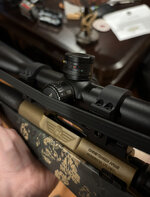
If the turret on your rifle looks like the one to the right on the Swaro page, that would not be helpful for my uses.
It is that style. You have to count the clicks or set one of the dots on a preset number of clicks with a range. I can change it out for a turret that is numbered though. It sounds like that is something I should do?

IMG_8442.jpeg
 
"Friends don't let friends count clicks" 😇 :)

Counting clicks is not good-There are better ways

Either get a ballistic turret like I posted above for your scope...See if Kenton makes one for yours.
Get a MOA turret cap (If you can)...OR...Get a different scope
 
"Friends don't let friends count clicks" 😇 :)

Counting clicks is not good-There are better ways

Either get a ballistic turret like I posted above for your scope...See if Kenton makes one for yours.
Get a MOA turret cap (If you can)...OR...Get a different scope
Thank you for the good advice and helping me get started the right way. Swaro actually offers a ring with the turrets numbered that will drop right on the scope. Although, I like having a good reason to buy a new scope and I could put this one on the 22 Creedmoor I've been thinking about to help my daughter get some scoped, trigger time lol.
 
Thank you for the good advice and helping me get started the right way. Swaro actually offers a ring with the turrets numbered that will drop right on the scope. Although, I like having a good reason to buy a new scope and I could put this one on the 22 Creedmoor I've been thinking about to help my daughter get some scoped, trigger time lol.
Even for your daughter, I would encourage you to get the MOA turrets (Listed in 1/4 MOA increments/Lines?) for that Swaro scope.
Budget for new scope?
 
Even for your daughter, I would encourage you to get the MOA turrets (Listed in 1/4 MOA increments/Lines?) for that Swaro scope.
Budget for new scope?
I only use MOA, I haven't had any interest in trying Mil. I typically look at what is available then set a budget based on what I want lol.
 
All I have ever used is MOA for dialing and never had a problem with it.
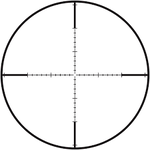
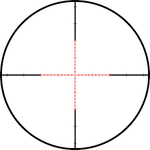
FWIW, my favorite reticle is the Leupold TMOA.

JD338
 

Attachments

  • images.png
    images.png
    3.6 KB · Views: 3
  • images (1).png
    images (1).png
    3.7 KB · Views: 3
All I have ever used is MOA for dialing and never had a problem with it.
FWIW, my favorite reticle is the Leupold TMOA.

JD338
Thanks JD, I do like how simple that is, but still has markings on it. Some of these are so busy I go cross eyed haha
 
I only use MOA, I haven't had any interest in trying Mil. I typically look at what is available then set a budget based on what I want lol.
MOA is great.
For hunting specifically, a regular plex reticle (SFP) with a good MOA Turret or a Ballistic turret will work great.

IF you want to use the reticle for shot correction or holdovers or hold offs, go with a reticle in the FFP/First Focal Plane.
If going with a FFP reticle, make sure it is thick enough at the lower magnifications for use in low light at lower power.
Having a lighted reticle would be helpful here as well.

FFP reticles and SFP reticles each have their pros and cons.
 
MOA is great.
For hunting specifically, a regular plex reticle (SFP) with a good MOA Turret or a Ballistic turret will work great.

IF you want to use the reticle for shot correction or holdovers or hold offs, go with a reticle in the FFP/First Focal Plane.
If going with a FFP reticle, make sure it is thick enough at the lower magnifications for use in low light at lower power.
Having a lighted reticle would be helpful here as well.

FFP reticles and SFP reticles each have their pros and cons.
I’ve always used a SFP because I’m often on low power while hunting around here. I can see how that could be an issue with a target 500 yards out like some of your videos of you shooting. I can only imagine the reticle is covering a large portion of your target. I’m going to start looking at some scopes tomorrow and also see if I can get that turret ordered. It will give me options.
 
I’ve always used a SFP because I’m often on low power while hunting around here. I can see how that could be an issue with a target 500 yards out like some of your videos of you shooting. I can only imagine the reticle is covering a large portion of your target. I’m going to start looking at some scopes tomorrow and also see if I can get that turret ordered. It will give me options.
I don’t have a problem with first focal plane reticles at 500 yards or at 1000 yards on steel or pd’s.
If, I’m doing 1000 yard bench rest or F class then I for sure will be using a reticle in the second focal plane, and the Turrets will probably be 1/8 minute of angle clicks.

Reticle subtension is important for hunting and competition shooting.
For hunting, you want a heavier reticle subtension.
For BR…Finer subtension

I use both second focal plane and first focal plane for hunting
 
I don’t have a problem with first focal plane reticles at 500 yards or at 1000 yards on steel or pd’s.
If, I’m doing 1000 yard bench rest or F class then I for sure will be using a reticle in the second focal plane, and the Turrets will probably be 1/8 minute of angle clicks.

Reticle subtension is important for hunting and competition shooting.
For hunting, you want a heavier reticle subtension.
For BR…Finer subtension

I use both second focal plane and first focal plane for hunting
You make shots with a pistol, further than i can with a rifle. I don't know how you even see the bullseye 400 yards out with 18 power scope haha. I apparently have a lot to learn here.
 
You make shots with a pistol, further than i can with a rifle. I don't know how you even see the bullseye 400 yards out with 18 power scope haha. I apparently have a lot to learn here.
On steel there is no bullseye.
Depending on how I am holding on the target, my crosshair is not always at the center of the target, whether I am shooting on paper or steel.

Benchrest shooting on paper close or 1K requires different glass (High Magnification).
Benchrest shooting has different goals than hunting and or regular shooting at targets (close or far).

For hunting , the goal is getting the bullet in the vitals. Bigger the animal, the bigger your target is.
On steel, the goal is to hit the target.
Hits a hit, even though you desire to hit center as it confirms your drops are on.
If your impact is centered horizontally, it tells you your wind call or your spotters call was on the money.

I like the 3-15, 4-16 class optics and similar magnification ranges for LR hunting.

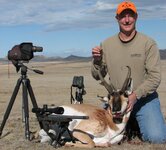
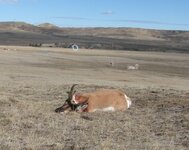
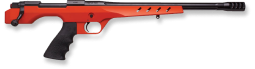
My longest big game kill was over a grand with a single shot XP-100 15-16 inch barrel with the scope on 15 power.
IMG_2025.jpeg

IMG_2024.jpeg
Shooting from the white circle
 
That's great shooting. My goal in this endeavor is for hunting first and to better my shooting at closer ranges second.

I'm going to want to practice the same way I'll be using it. I agree, shooting for vitals is my focus. I guess I never thought about your steel not having a bullseye on it.
 
That's great shooting. My goal in this endeavor is for hunting first and to better my shooting at closer ranges second.

I'm going to want to practice the same way I'll be using it. I agree, shooting for vitals is my focus. I guess I never thought about your steel not having a bullseye on it.
Well, sometimes we paint a red dot 🔴 on our targets.
So, maybe we do have a bullseye at times😇
Derrick shooting my Speedy 6mm Creedmoor XP-100.
 
Last night I signed up for an IBS style shoot here local. 3/6 at 9am. I've decided to use my 7 mag for this shoot since it's heavy, long barrel, good optic and I think this will give me some practice for longer rangers. Be good to meet some local guys doing these shoots as well.

I have decided I'm going to build a load just for shooting paper. Using Berger's Twist Calculator I checked probably 10 different target rounds and settled on... not a target round. I'm thinking the 150g Berger Classic Hunter. I was really set on the LRx in 168, but according to their twist calculator my 9.5 twist barrel will only be moderately stable.

I was told the wind at this shoot is a big factor, it typically is coming in at a direct right angle and 10 to 20 mph. That will be the most difficult thing for me to adjust to.
 
I would consider this one:
According to the Berger Twist calculator it’s saying my 1:9.5 barrel can’t stabilize that bullet consistently. I was really set on the 168g Hybrid initially. What are your thoughts on that calculator and how well it matches up to real world? I worry about consistency.
 
So if I’ve interpreted what you’re wanting to accomplish in order to achieve precision long range shooting with an acceptable, meaning no less than 50% hits in field positions, on the clock……. But with the end result to most likely (if you have the proper equipment and skills) to approach 80% hit probability or more!?! You’re going to want a dedicated rifle in order for you to learn proper shooting fundamentals, and with enough hits on steel targets, because paper targets don’t instantaneously tell you what you need to know…. You’re gonna wanna use what every person doing the same thing is using.

As a pro they mostly use 6 mm Dashers, or BRA of some type, a few use the 6 mm GT, or some other 6 mm, like a 6x47. A lot of shooters have also gravitated towards the 25 caliber guns recently, I personally prefer the 25x47 Lapua. As all the high BC bullets are rather long, and you don’t have to seat them as deep in the case as compared to the 25 Creedmoor. That said plenty of people have gotten started shooting PRS, or NRL hunter with a 6.5 Creedmoor. As far as NRL Hunter goes the 6 mm will not make the power factor which is the bullet wait times the velocity. Therefore you’ll have to be using something more geared towards hunting.

But there is a caveat to that, recoil. The arch enemy of all when it comes down to precision shooting. Plain and simple, it’s easier and more accurate to shoot a lighter recoiling cartridge then a big boomer that’s a fact!

If you really wanna learn how to shoot long distance, you’re gonna want an extremely well built gun for accuracy. It makes no sense to waste ammunition and your time wondering is it is the gun and/or the ammunition or me that I’m missing? Yes the wind can go ahead and play with you as it blows across the wide open spaces, but that’s why you’ll need a reticle that as harsh marks for corrections!

Which gets down to the next thing you’re gonna need, a high quality scope that has adjustable elevation and windage turrets, as well as a ranging radical (FFP ONLY) that allows you to immediately hold for corrections and send another round down range! Mrad/Mil system works best, less revolutions to dial, or see in your reticle. You can certainly get away with 12 X, or 15 X no problem! I’ve shot entire two day matches with my scope sitting at anywhere from 9 to 11x for targets out to 1200 yards.

As an RO, I’ve often watched plenty of people waste all their time on the clock dialing up and dialing down to find every target. Meanwhile, you could be shooting if you just left your scope with enough power that’s usable for the situation to accomplish both. Meaning, as long as you can see where your hits and misses are. By the way, I like really good class! The European stuff blows away anything you can find in Japan. That said, you also have to have repeatable clicks that match exactly what you dial. Bushnell is one of the those companies I would recommend if you don’t have a lot of money for the sport. I’ve had two of their scopes outlast two NightForce scopes! And I can honestly say I really like them. What you dial is what you get. Leupold scopes work well, but don’t expect to find targets in extremely difficult locations during odd light conditions like if you were using a top tier European scope. I do though really like the PR-2 reticle made by Leupold because it’s a .25 mil grid system. Easy to bracket a target between the two hash marks, and it’s cleaner than a reticle with .2 mil hash marks. Simple to remember too…. .25 .5 .75 1 whole number…. Less is better IMO.

Now if you’re planning to go to the extremes in long range shooting, meaning ELR, there is nothing better than a 300 Norma magnum in a 1:8” twist barrel! But you’re gonna wanna want a heavy gun, meaning 18 pounds at a minimum if you plan to be competitive, 23 is better!

NRL Hunter rules state that your rifle must weigh no more than 16 pounds in open heavy, 12 pounds in open light, there is as well as they have a factory rifle division. You can use any caliber you want as long as you make power factor, which is 380,000.

You’ll also need a good ballistic app, range finding binoculars, or binoculars and rangefinder, but if you go that route in NRL Hunter, you’re gonna be eating up the clock and you’re gonna get your butt kicked. I like to use a dope card on my wrist that I can use dry erase markers for the target array on each stage.

Obviously, you’re gonna need a tripod so you can range your targets accurately in an instant, and shot off it. Really Right Stuff makes the best and as well worth the investment. The same thing can be said for your bipod. If you’re gonna be competitive at all, you might as well spend $1000 on an MDT Clyde pod triple pull….. If not, you will be at a disadvantage against all the other shooters that have that set up!

This is an expensive sport to be a top competitor in, or get good at. If you’re cheap like I was you’ll be lucky if you’re a marksman, unless you’re one of the greatest shooters in the world. They can get it done with a factory rifle no matter what everybody else is using in the field! Very few can do that, Jon Pynch one of them and is the only person I’ve seen capable of doing that with the cheapest Factory Tikka rifle in 6.5 Creedmoor. But he didn’t start out learning to shoot long range precision shooting with a factory rifle, but a custom gun and his hand loads to boot and shot thousands of rounds.

Obviously, you’re gonna need a really good backpack to hauler gear in. Which means the weight should be distributed onto your hips, and not over your shoulders like you’re in Boot Camp with your Rusack.

You can do very well in the sport with factory loaded ammo, that said most people hand load for their rifles in both sports, PRS and NRL Hunter.

The top 10 shooters in the United States for PRS all shoot a 6 mm Dasher for the most part. And the reason being is, it’s one of the most accurate cartridges in the world, and has no recoil, especially when you put a muzzle brake on it and it weighs 23 pounds.

NRL hunter is a slightly different story since it’s so new, people show up with just about everything. All I can say is the 25 cals are tough to beat considering they have a BC of like .650 and no recoil!

Now hopefully you’ve noticed one thing in common, I keep saying no recoil. That’s because it eliminates the one element that can prevent you from having good fundamentals, and having a good time hitting targets! You won’t want to be shooting a heavy recoiling gun 150 times over a single weekend. As well as if you’re not making hits, you’re not gonna be feeling too great about your performance now are you? Hence why you want extremely good equipment! Sure, a Seekins rifle has just recently come away with a win in NRL Hunter. So don’t let a factory rifle sway you from going that route. It’s just a matter of how far down the rabbit hole you wanna go?

Hopefully that makes sense? I will say this, this sport for the most part doesn’t allow anything larger than 30 caliber, or 338 going over 3200 ft./s unless you’re shooting ELR matches.

Once you get your rifle dialed in to your ammo, and you have the proper gear to compete, these matches will make you a better shooter than 90% of the other people in United States.
 
Last edited:
Back
Top